
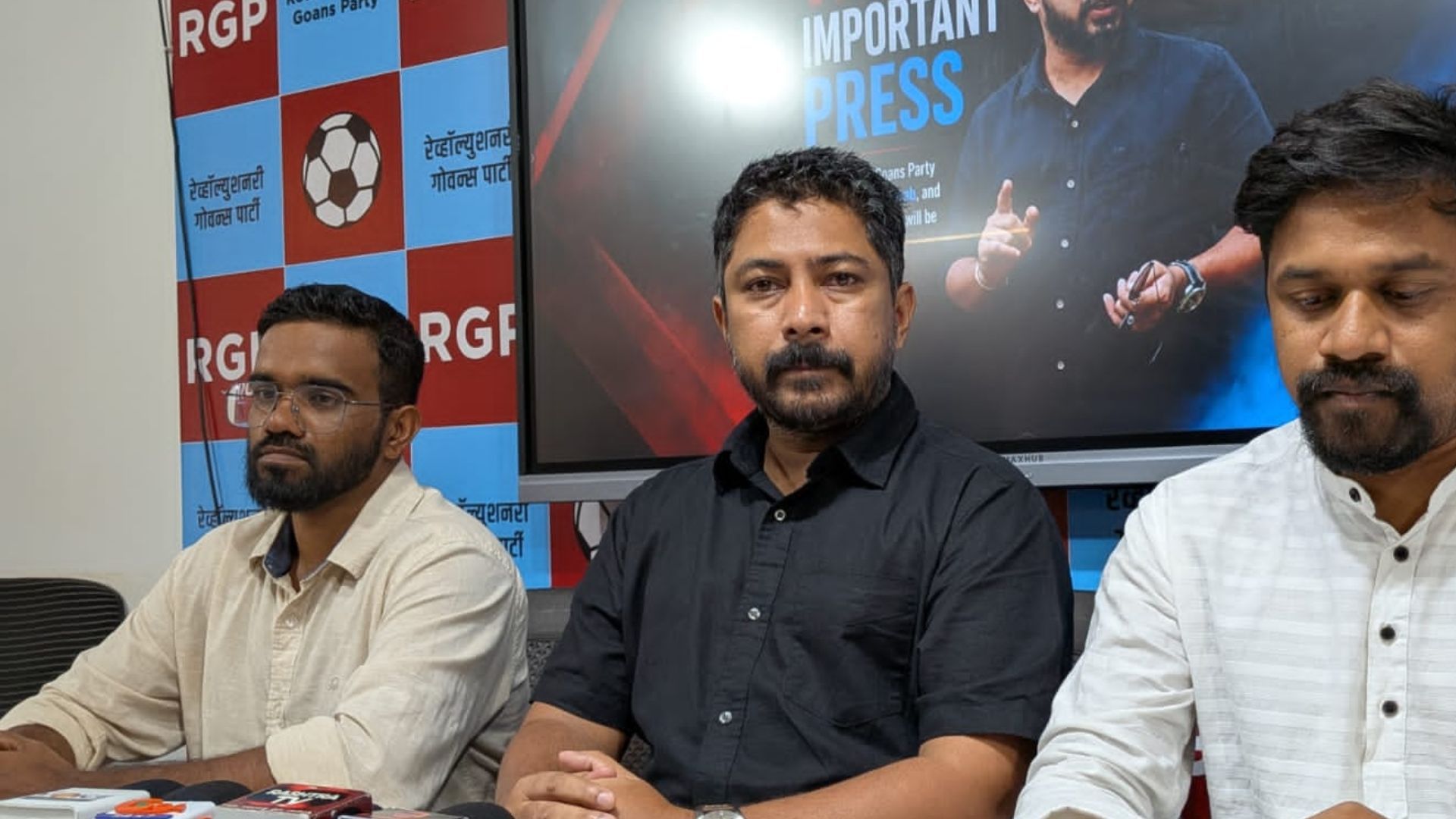
The Revolutionary Goans Party (RGP) was born in the fires of genuine Goan frustration. Youth disillusioned with demographic shifts, joblessness for locals, land scams, and the endless tug-of-war between the BJP and Congress saw in RGP a raw, unfiltered voice. Starting as an NGO in 2017 and morphing into a political outfit just before the 2022 Assembly elections, it struck a chord. Contesting 38 of 40 seats, it bagged nearly 10% of the vote share (emerging as the third-largest force and the biggest regional outfit after the national heavyweights). One MLA was elected. Hope was kindled among the disgruntled.
Four years later, that hope has curdled into something far more familiar. Another implosion.
On 21 May 2026, founder and president Manoj Parab resigned not just from the top post, but from primary membership and active politics altogether. He cited “dirty politics,” internal power struggles, emotional exhaustion, and his own failure to nip factionalism in the bud. The party’s core committee accepted the resignation swiftly, issuing a statement that it was “not a prank” or publicity drama.
The irony could not have been sharper. Just months earlier, Parab had himself resorted to a “prank” (posting an old photograph of himself and MLA Viresh Borkar aboard a flight, captioned to suggest they were heading to Delhi for alliance talks). When the political class reacted, he clarified it was from a Mumbai trip and done to gauge reactions. What began as youthful audacity has now become symptomatic of immaturity in high-stakes politics.
This is not merely a leadership change or a family feud. It is the logical endpoint of a model that proudly rejected pragmatism in favour of purity. RGP positioned itself as the party that would attack everyone (ruling and opposition alike) because nothing less than total dismissal of the old order would do. ‘Our way or the highway’ was the operating manual. High-handedness, public feuds, and an unwillingness to build bridges even on shared Goan issues became the hallmark. The result? Repeated vote-splitting that indirectly helped the very establishment they despised, and now an internal collapse that has left even their most loyal supporters wondering what exactly they invested in.
The grievances RGP tapped into are real. Goan identity, protection of land, local jobs, and environmental safeguards are not fringe demands (they are existential for a small state like ours). The disgruntled youth who formed its fan base were not imagining the problems; they were reacting to them. But turning that legitimate anger into sustainable politics required more than aggression and purity tests. It required pragmatism (the art of turning 10% into 20%, of converting protest energy into legislative leverage, of knowing when to fight and when to negotiate without selling the soul).
The opposite extreme is equally dangerous, and we have seen it elsewhere. When pragmatism strips away all principles, it becomes cynicism (the kind where everything is negotiable, every alliance is transactional, and the original mission dissolves into power games). That path, too, betrays voters. But RGP’s tragedy is the mirror image. Principles without pragmatism lead to isolation and eventual irrelevance. You cannot build an alternate political model by treating every other Goan party as the enemy and every compromise as betrayal.
The high-handed “too frank” style (attacking allies and opponents with equal venom, refusing tactical flexibility, and running the organisation with a top-down rigidity) has now exacted its price. Youthful energy is a powerful fuel, but without institutional maturity it burns out fast. Internal rifts, allegations of power-centric politics, and public unfollows on social media do not signal revolutionary discipline; they signal the same “dirty politics” the party once claimed to reject. The disillusioned voters who backed RGP in 2022 deserved better than to watch their hopes reduced to memes about pranks and press conferences about resignations.
Goa does not need another protest outfit that flames bright, and then, implodes. What the state desperately requires is a mature regional force (one that is uncompromising on core issues of Goan identity, land, and livelihood, yet pragmatic enough to deliver results). Principled pragmatism is not dilution; it is the only way to move from slogan to governance. It means selective issue-based cooperation where it serves Goa, professional party structures that outlast individual egos, and the humility to course-correct when tactics fail.
Parties like the Goa Forward Party have shown, however imperfectly, that this balance is possible. They have carved a space as a regional voice that fights for Goemkarponn without descending into permanent opposition theatre or internal chaos. Their lone MLA’s steady work in the legislative assembly (consistently flagging issues that touch the everyday concerns of ordinary Goans) combined with a pragmatic choice to remain aligned with Congress and avoid splitting votes, while still pressing key matters for the state, quietly suggests one possible route toward more enduring regional politics.
RGP’s story is not yet fully written (youth energy has a way of surprising us), but the implosion of the past week has made one thing painfully obvious. Purity without pragmatism is not revolution; it is self-sabotage. The disgruntled youth of Goa deserve a political vehicle that channels their anger into lasting change, not into headlines about pranks, resignations, and “who unfollowed whom.”
The lesson is simple, even if it is bitter. In politics, being too frank without being pragmatic is just another way of staying powerless. Goa needs leaders who can be both principled and practical. Anything less is just more of the same old disappointment dressed in revolutionary clothing.
The writer is a management consultant specialising in enterprise risk, governance, and policy controls
Comments (0)
Please login to post a comment.
No comments yet. Be the first to comment!