
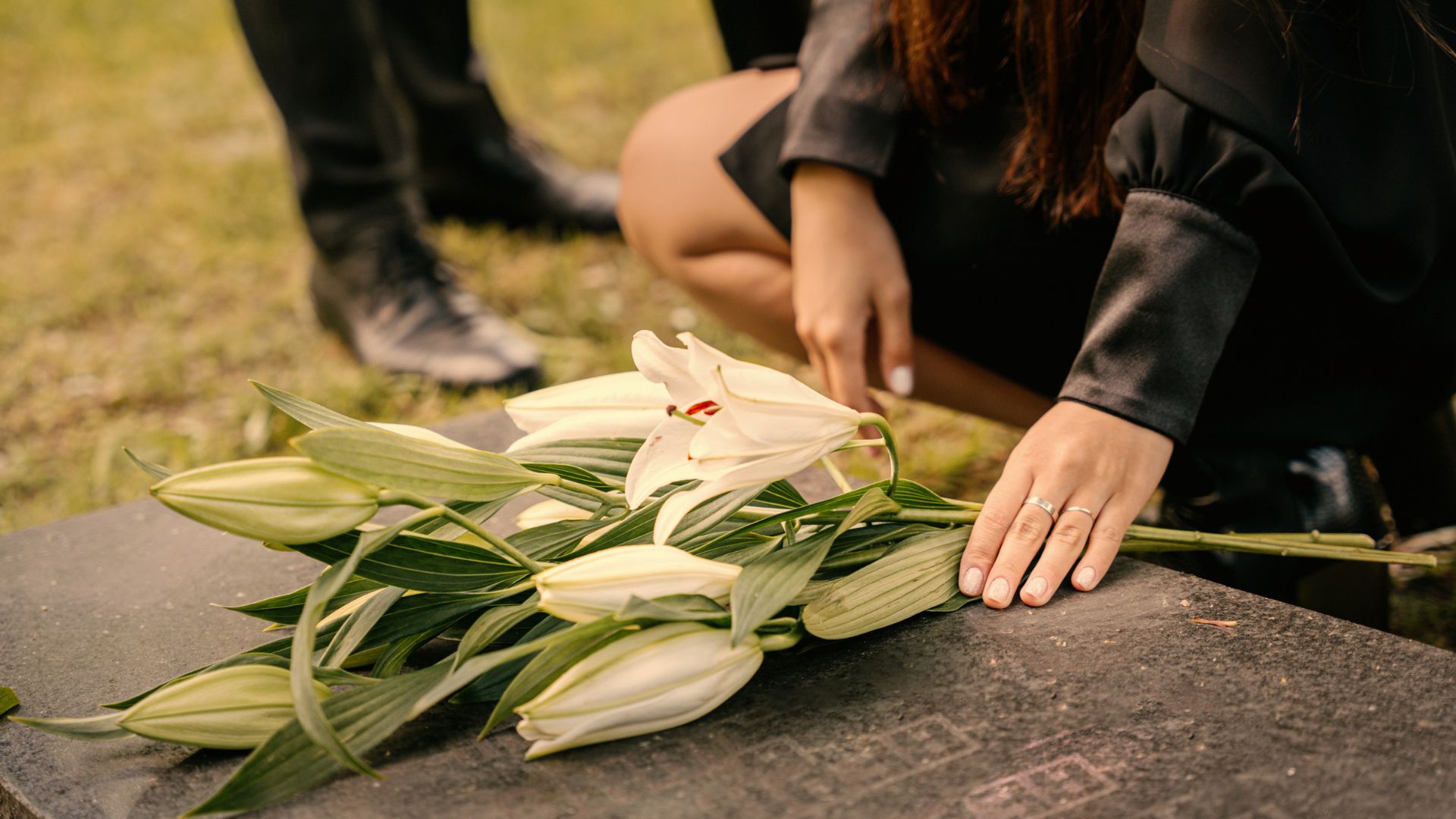
Every year, on November 2, the Catholic community commemorates the faithful departed. The observance is no different in Goa, where it is accompanied by its own set of customs and traditions. Speaking of the departed, Goans also had a distinctive set of funeral customs, many of which reflected the social and cultural traditions of the times.
While death may be the end for the person who has passed away, it is certainly not the end for his/her family, which has to make arrangements for a proper burial, particularly in the case of Catholics.
In Goa, in the olden days, there were no telephones, and so people communicated news, such as the death of an individual, only in person or through ‘messengers’. There was also an errand boy, or pedo, who would go around the village carrying a bell and a handboard to announce a death. Of course, newspapers existed too, but they were accessible only to the privileged few.
SPREADING THE WORD
How did news of a death in the family spread in the past – and perhaps, even today, in remote or traditional communities? On the demise of a family member, the nearest relative would begin wailing loudly, which also served as an announcement to the neighbours. On hearing the wails, they would rush to the house to find out what had happened, and also offer help with the funeral arrangements. They would also hurry to inform others and make arrangements to notify relatives of the deceased who lived in other cities or villages.
The parish priest would also be informed, as he needed to make preparations for the funeral. The church pedo would be instructed to dig a grave and toll the bells for the deceased.
The tolling of the bells was another way of informing villagers that someone had died. The pattern of the tolling conveyed some information about the deceased. If a child or teenager had passed away, the bells were tolled continuously. If it was a woman, three consecutive strokes were repeated after a longer pause. In the case of a man, another set of three consecutive strokes was added. If the deceased did not belong to the village, the bells were tolled differently – continuously for around three to five minutes, after which they stopped.
The relatives were not the only ones who mourned the departed soul. Wailing and crying were also part of the duty of the mundkars of the bhatkars. They would cry aloud, recounting incidents from the past and bringing to light the virtues of the deceased. Whenever someone walked into the house, stories and incidents involving both the person and the departed would be narrated – and these were not necessarily always favourable to either!
ATTIRE OF THE DEPARTED
One of the tasks was that those who traditionally handled the preparation of a body for burial would be contacted. They would come to the house of mourning, where they would wash and dress the body in preparation for the funeral.
The attire of the departed varied according to the person's marital status. A child would be dressed as an angel, sometimes with even a pair of ‘wings’ made of paper. The unmarried were dressed in white.
A young married woman would be dressed in red or a colourful outfit, with flowers adorning her hair. A widow, on the other hand, would be dressed in black or sober colours, while men would be dressed in suits.
DRESSED FOR THE OCCASION
A woman whose husband had just passed away would attend the funeral wearing a colourful dress, with her hair adorned with fresh flowers. She would also wear glass bangles, which, on the day of the funeral, would be broken against the edge of the coffin before it was carried out of the house. This ritual symbolised the end of her married life and the beginning of her widowhood.
PRAYERS, PROCESSIONS
Arrangements would be made for a funeral procession to carry the body. The pad vigar and the confrades – members of the Confrarias – would accompany the body. It was customary for close family members to join the confrades of the deceased's village in the procession. The family of the deceased had to take note of this gesture, as they were expected to reciprocate when a member of the family, that had offered such support, passed away.
There would also be quite a commotion, with the wives of the mundkars and others, who had received help from the bhatkar, crying and wailing loudly, while recounting the virtues of the deceased.
After the prayers at home, the body was taken out of the main hall and carried to the carriage, which was pulled by the church pedo. The coffin was accompanied by close relatives and family friends, who took turns in doing the honours.
In the olden days, the coffin – especially that of a prominent personality – would be accompanied by relatives and other important people holding the cetin bands. The higher the social standing of the deceased, the more prominent were the people chosen to hold these bands.
Do you remember seeing cetin bands attached to the decorative handles of a coffin? Well, a group of people would hold these for a certain distance, after which, another group would take over. This was done in turns, and hence the Portuguese term turnos.
On the day of the funeral, a couso of feni would be brought near the cemetery. After the funeral, the confrades and others were offered a calice of feni. Family members, relatives and close friends would then return home. After their departure, only the pedo remained at the cemetery, accompanied by a family member or close friend, to ensure that the grave was properly covered with soil.
Comments (0)
Please login to post a comment.
No comments yet. Be the first to comment!