
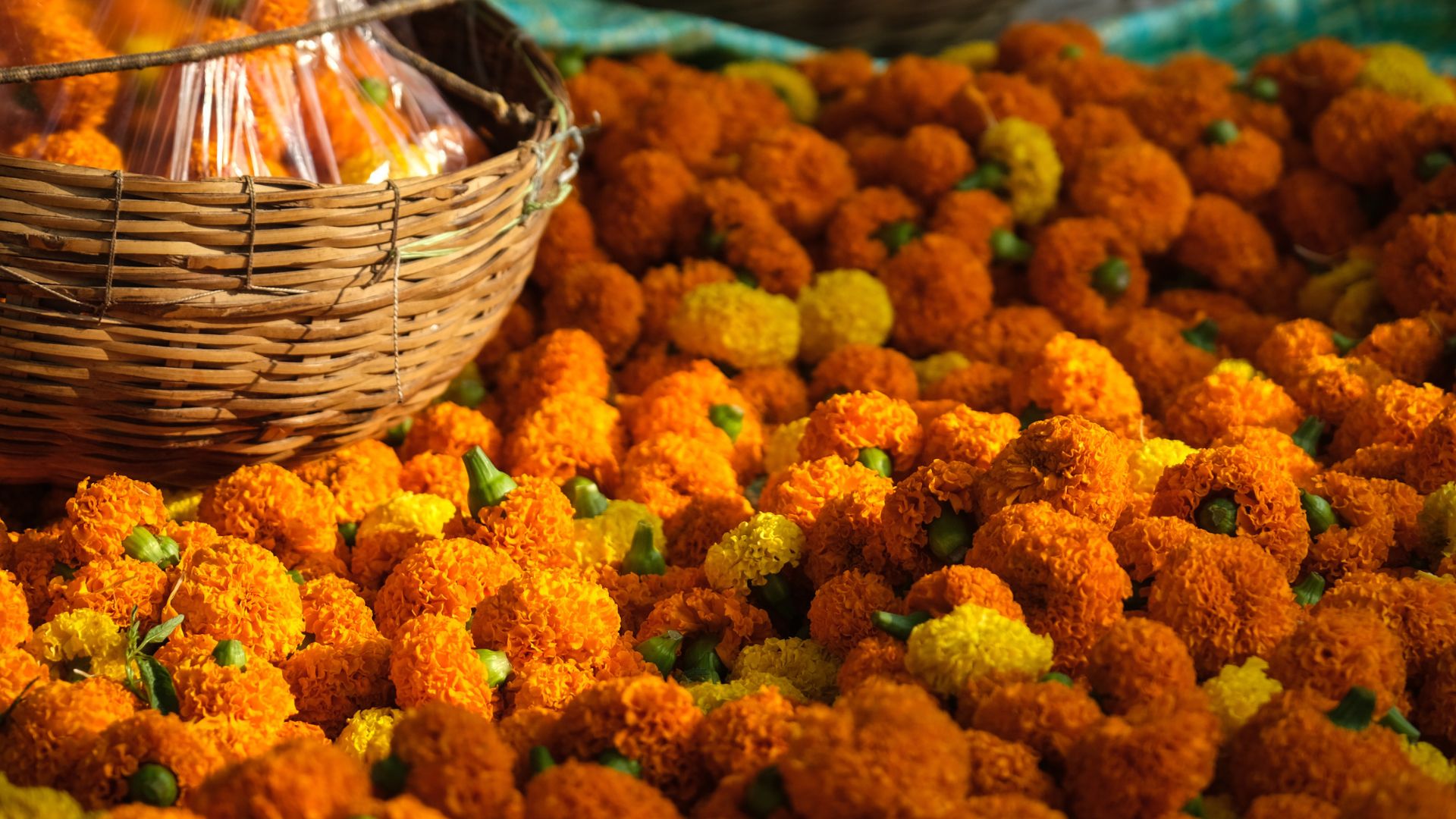
It’s that time of the year, when garlands and baskets full of marigolds can be seen in markets and along roadsides in Goa.
There are two popular types of marigold flower – African Marigolds and French Marigolds, but the fact remains that marigolds originated in South America. They got their name ‘Mary’s Gold’ in Portugal and Spain because they were placed at the foot of the statues of Mary, mother of Jesus in Fatima (now in Portugal, but during some time in history, was a part of Spain).
To confound the confusion, marigold flowers are known as Rozam or Rosam in the Konkani language and a rose is known as gulab.
Exactly when marigold flowers reached Goa and how it happened is not clear, but it happened somewhere during the 18th century when these plants were introduced into Europe by the Spanish and the Portuguese who had colonised Latin America as well as Pondicherry and Goa, Daman & Diu by that time. Whether the introduction was deliberate or accidental is also not known.
ORIGINS, VARIETIES, FESTIVITIES
The plant grows easily, self-sown and hence the named Tagetes after a mythological, Tages, meaning ‘born by ploughing the earth’.
African Marigolds have large flowers from lemon yellow to orange petals and are mostly Tagetes erecta and its hybrids. French Marigolds are relatively smaller in size and have darker, almost brown patches on the petals and are cultivars (cultivated varieties) of Tagetes patula. The small-flowered Lemon or Signet Marigolds are not so common and they are cultivars of Tagetes tenuifolia.
At the end of Navratri comes the festival of Dussehra or Vijaya Dushmi, a day on which people worship the tools of their trade, known as Auth Puja, by cleaning them and placing marigold flowers on them. People wash their cars, buses, tractors and other vehicles and decorate them with garlands of marigolds. These flowers have a ready market for making garlands and decorating wedding mantaps.
BEYOND BEAUTY
The marigold, Tagetes erecta, flowers go beyond colour and symbolism. Marigolds contain a substance called limonene, which is a natural insect repellent. The limonene in marigolds helps to keep pests like whiteflies away. Planting marigolds between tomatoes protects tomato plants from harmful root-knot nematodes in the soil. They trap and kill parasitic root knot nematodes. The root-knot nematode Meloidogyne incognita-infested tomato plants have very conspicuous root galls or knotty swellings on the roots. Toxins in marigold root kills the nematodes before they grow and reproduce.
This also works for banana, heliconia and other plants that have roots infested with nematodes. The root exudates contain thiophenes that are anti-bacterial and, hence, marigolds should not be planted near legumes due to their adverse effect on the nitrogen-fixing Rhizobium japonicum.
Plant marigolds along with the crop. If you have whiteflies on your ornamental or crop plant already and you rush to plant some marigolds, this will not necessarily eliminate an existing infestation. It will only reduce their spread. Marigolds can help to keep numerous pests like the leaf-miner away. That means your plant is less likely to suffer from an infestation that could destroy it.
The Directorate of Agriculture has provided farmers in Goa with marigold seedlings to encourage commercial cultivation of this flower crop which has a high demand in Goa, especially during Dussehra and for wedding décor. Marigold flowers provide additional income to tomato growers and other farmers in India from Dusshera and Diwali through the wedding season till the start of monsoon rains in June.
It is also grown as a commercial flower crop in India, and so it makes good sense to plant marigolds. So, why not join the increasing number of marigold growers – there is scope for more!
Comments (0)
Please login to post a comment.
No comments yet. Be the first to comment!