
When we speak of any festival in Goa, it is only natural that we also speak of the cuisine associated with it. Our festive foods are, in many ways, a reflection of our ecology and our agrarian way of life.
Recently, on 20 October 2025, we celebrated Diwali by preparing at least five dishes made from fov or flattened rice. Fov carries deep significance, symbolising the harvest season.
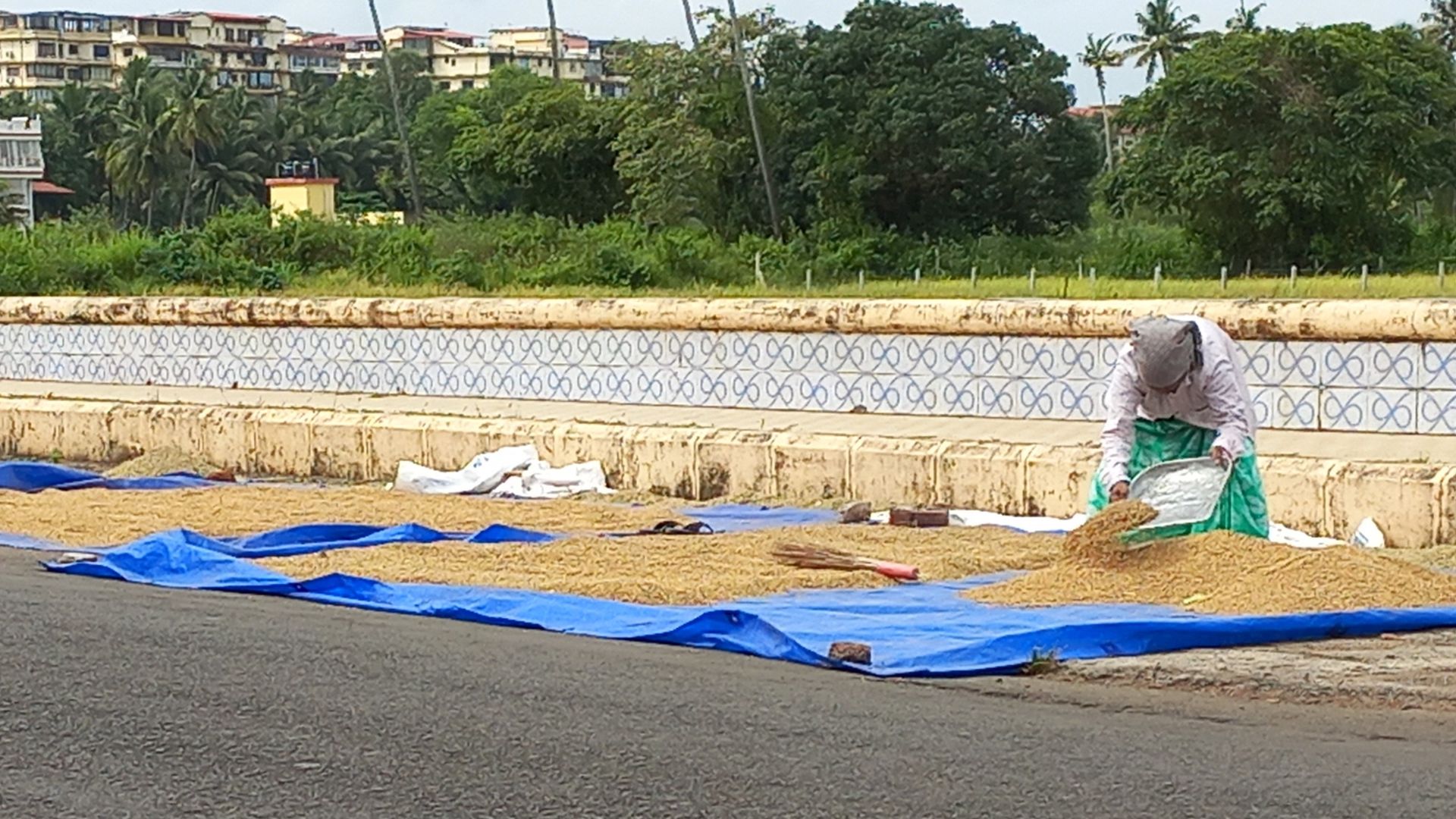
Traditionally, as the monsoon begins to fade in September, the post-monsoon heat and bright sunlight transform our lush green paddy fields into shades of golden yellow, signalling that it is time to harvest and store grain for the days ahead. Rice is the staple crop of Goa, and thus it naturally finds its place in our rituals, festivals and cultural practices.
It is therefore natural that fov features as an offering during festivals such as Diwali — both Dhakti (small) Diwali and Vhadli (big) Diwali, the latter of which falls on 2 November this year. Vhadli Diwali is also known as Tulsi Lagna, when the tulsi plant in the courtyard is adorned like a bride and a ceremonial wedding is performed between Tulsi and Lord Vishnu.
The ritual concludes with an offering of raw fov, garnished with pieces of sugarcane, coconut, amla and other seasonal produce.
BEHIND THE DELICACY
Neelam Dutta of the Ranchiood–Goan Kitchen Facebook page explains, “Our region is rice-producing, and one of our main processed rice products is fov. The diversity of fov recipes helps create demand and, in turn, generates more revenue for local food producers. The idea, fundamentally, is to support and sustain the region’s primary food producers.”
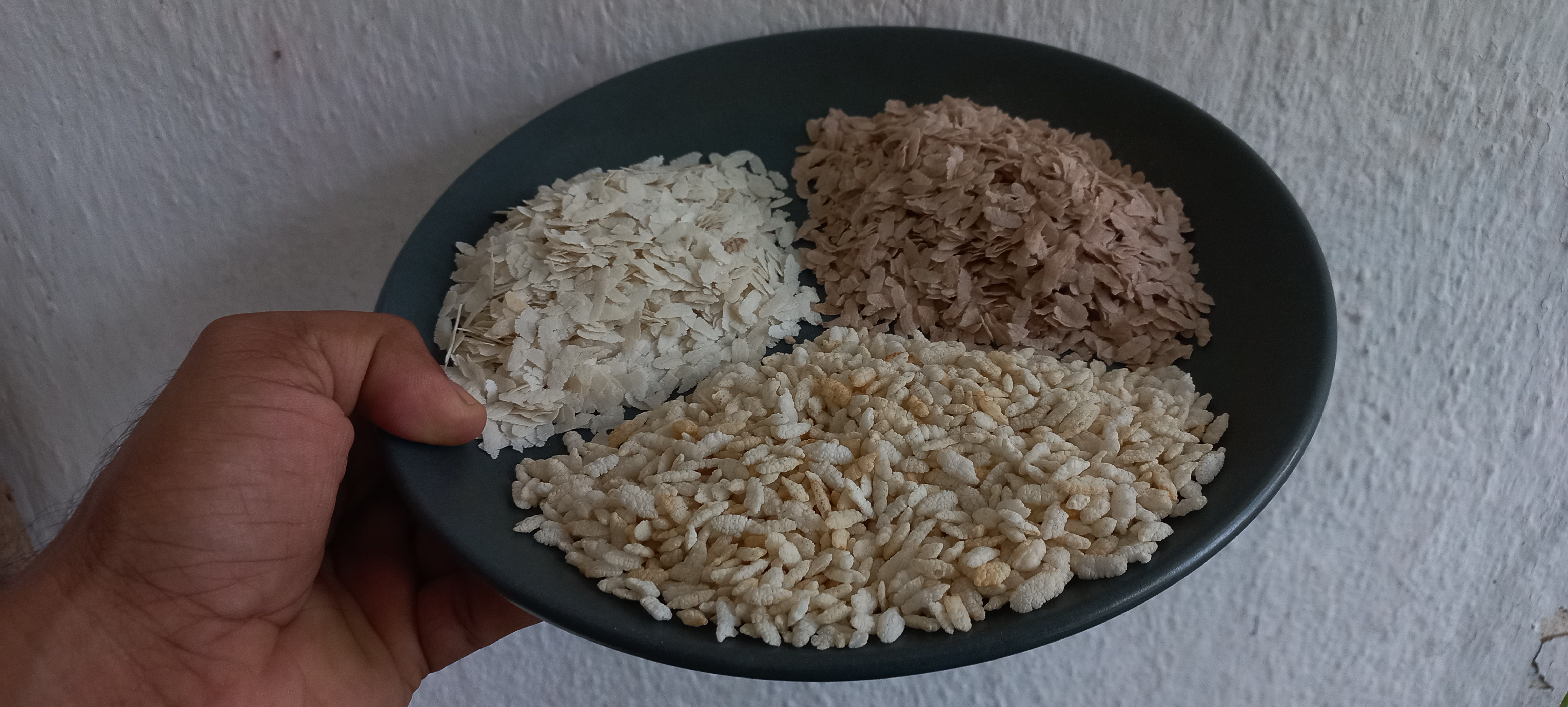
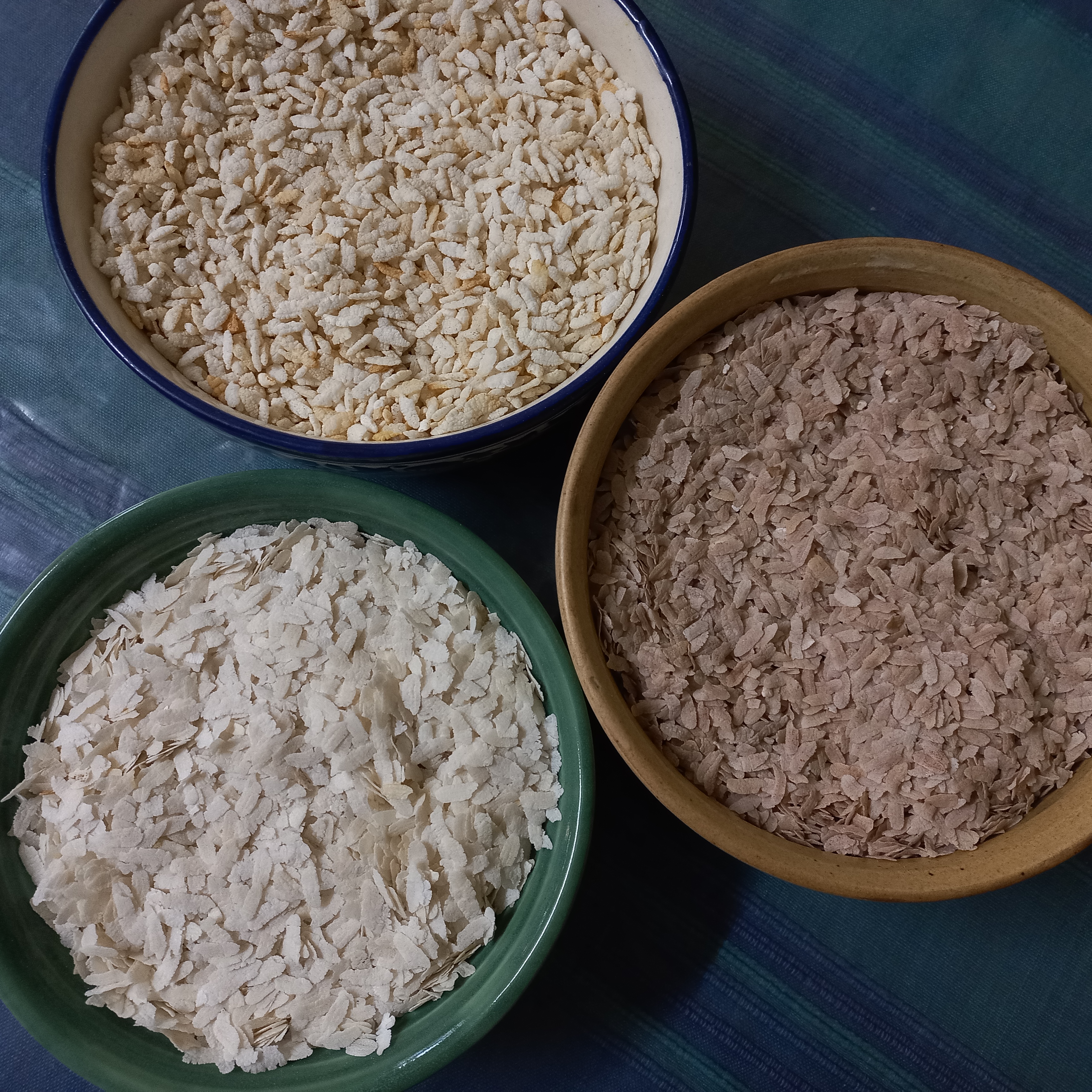
Fov, as we know, is made from rice, and it comes in a few notable variations. The two main types are brown and white fov: the former is produced from the Jyoti variety of rice, while the latter comes from the Jaya variety.
The process begins by soaking the rice in water for at least ten hours. After draining the water, the grains are dried in the sun and then roasted in a roaster over a layer of sand, which prevents them from burning. Finally, the roasted grains are flattened to produce the fov which is used in many Goan households and festive dishes.
THE MORE, THE MERRIER
Alongside these two main varieties, there are other types of fov, including patal fov, which should be eaten raw as it becomes mushy when washed; gol fov (rounded), lamb fov (long), and fulayalem fov (puffed), commonly used to make chivda.
During Diwali, a variety of fov preparations are made, including kalyale fov (brown fov mixed with jaggery), dudhatale fov (fov combined with milk or coconut milk), takatale fov (fov mixed with curd), and Batat fov (fov tempered with mustard and cooked with boiled potato), among others.
THE DIWALI CONNECTION
Fov is not only a Diwali delicacy, but is also prepared during Gokulashtami or Krishna Janmashtami, usually celebrated in August, about two weeks before Ganesh Chaturthi. Tradition holds that Lord Krishna was offered fov after his ceremonial bath upon returning home from slaying the demon Narkasur — the very event commemorated during Diwali.
These festive dishes, made from paddy, underscore its cultural significance. The paddy fields, so integral to Goa’s landscape, ecology, economy and heritage, take centre stage during Diwali through fov and its many varied forms.
Comments (0)
Please login to post a comment.
No comments yet. Be the first to comment!